Trusting Tradition vs. Embracing Evolution: Why the Media Mix remains critically important in advertising
With AI rapidly infiltrating the advertising space, there is growing concern amongst media experts around brand safety and the decline of the traditional media landscape. How can we, as media planners, help advertisers best utilise their budgets and accommodate evolution?
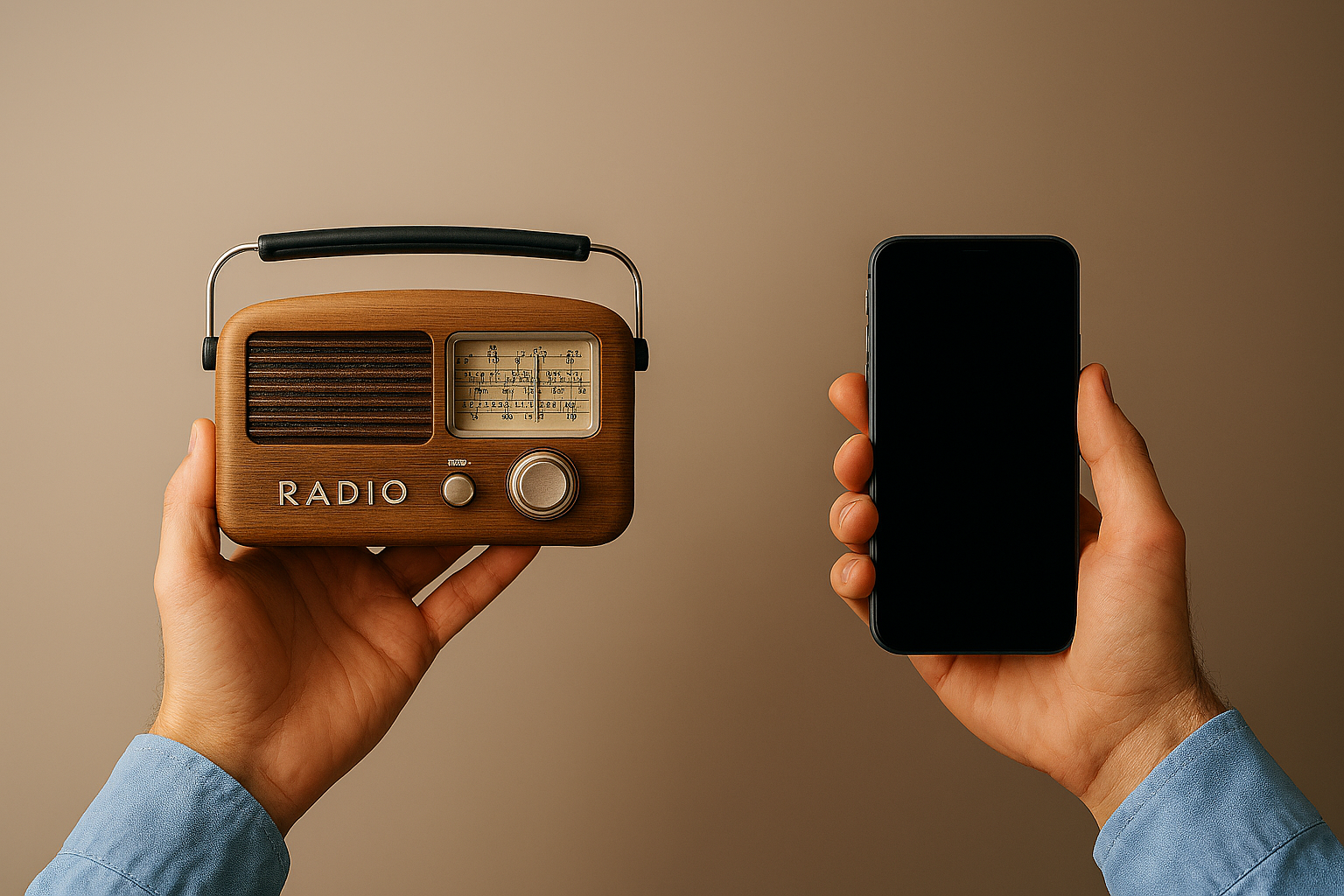
Are traditional media channels in decline and is the digital world dominating too much?
Reading a recent White Paper by Ian Whittaker, he states that “Out of Home (OOH) is underutilised at just 3% of UK ad spend.”[1]
A shocking statistic given OOH is renowned for providing the ability to build mass awareness. Outdoor reaches 98% of the UK population on a weekly basis and is a highly impactful channel, providing brands with a physical imprint in unmissable ways. OOH also helps maximise the business impact of other media platforms, with a 54% average uplift in Search when run in conjunction with outdoor campaigns.[2] So, with all this in mind, why does OOH account for such a small fraction of UK ad spend?[3]
As media buyers, it is vital that we question whether advertising spend is allocated effectively. ONS found that the UK invests disproportionately into digital media, with approximately 78% of spend distributed into online platforms across 2025[4].
We do need to face up to the fact that the media landscape is evolutionary, and there are undoubtedly strengths of using digital advertising. Many digital platforms have introduced AI, which can catalyse ad production and help with initial media planning. The main argument that digital offers clearer data vs. traditional channels in showing ROI achieved post-campaign is still true on face value however advances in measurement of brand awareness media types are happening fast.
There are challenges that we need to consider:
- AI risks advertising becoming commoditised and thereby reducing its value.
- Over-relying on technology could lead to algorithms prioritising performance-based platforms depending on what is inputted, so human intervention remains crucial to brand advertising to ensure the right optimisations are made.
- Media plans may navigate too much towards digital and social platforms, which could risk linear media channels, such as TV, OOH, and Radio, being reduced in prominence. This could be detrimental as these traditional media channels drive core brand metrics, such as trust and awareness, which help support a better overall performance in the evolving digital landscape.
What is the solution to this?
As marketeers put the case forward to their board members to recognise advertising as an investment, rather than just another cost, selecting a logical split to advertising is integral to brand success.
Within the advertising landscape today, the 60:40 brand v activation split is still an effective strategy to broadly follow as traditional media channels drive brand awareness and consideration, leading to the activation and action that digital platforms deliver.
In an era of ongoing inflation, the Cost-of-Living Crisis, and the rise of AI, media planners face a troubling dichotomy. By clinging too rigidly to traditional media channels, we run the risk of not embracing the evolving digital landscape to its full potential. Nevertheless, to build and retain brand strength, media strategies must combine long-term brand building with short-term performance activation to reach the masses and gain short-term ROI.
The optimum media mix, then, remains more crucial than ever before. Investment into traditional media types needs to be rebalanced so that brands can build both brand fame and an emotional connection with consumers to help them blossom further down the funnel.
[1] Branding in the Age of Inflation: Thinking Outside the Playbook – OOH White Paper, Ian Whittaker
[2] IPA Databanks, Analytic Partners
[3] Route
[4] ONS.